Offshore Wind Energy
 We are in a season of milestones for offshore wind energy. Three projects off the Atlantic Coast of the U.S. celebrated major progress towards completion:
- Vineyard Wind 1, an 800-megawatt (MW) project south of Martha’s Vineyard, MA, completed construction on all 62 turbines. The last turbines still need to undergo commissioning (the process of inspections, safety system checks, grid connection verification, and blade rotation tests) before the wind farm is fully operational. Once finished, the project will power the equivalent of 400,000 homes in Massachusetts.
- Revolution Wind, which will deliver 704 MW of power for Rhode Island and Connecticut, started sending energy to the grid on March 13th. The project is the nation’s first multi-state offshore wind farm, and it is projected to provide power to about 350,000 homes across both states, or about 2.5% of the area’s power supply.
- Coastal Virginia Offshore Wind (CVOW) also began delivering power to ratepayers in Virginia in March. Once complete, CVOW will be the largest offshore wind farm in the U.S., generating 2,587 MW of offshore wind energy for the state. This will provide power to approximately 25% of Dominion Energy’s residential consumers.
All three of these projects suffered delays after the Trump Administration issued a stop-work order on the five offshore wind projects under construction last December. All five projects’ developers challenged the order in court, and all five were allowed to resume construction earlier this year.
Power from these projects will help meet rising energy demand and improve grid reliability at the times when power is needed most. Vineyard Wind helped supply power during the recent Winter Storm Fern and performed better than some coal-fired power plants.
A study from Union of Concerned Scientists showed that Revolution Wind and Vineyard Wind would have reduced New England’s blackout risk by 55% if they had been operational during the winter of 2024-2025.
Across each of these projects, NWF and many of our partners engaged at every step of the offshore wind development process to champion safeguards for wildlife and habitats for incorporation by developers and regulators. NWF is committed to advancing renewable energy goals that reduce harmful greenhouse gas emissions alongside science-backed protections for biodiversity.
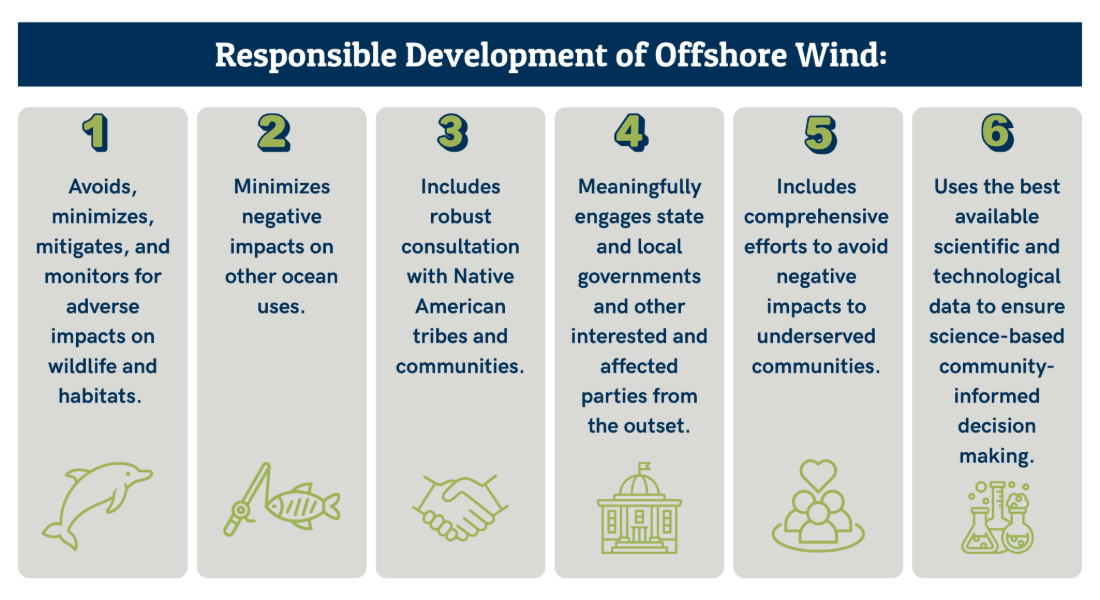
The wind farms will not just deliver energy. Each of these projects has committed resources to support the communities that host their construction and operations sites, providing benefits like funding for local clean wastewater initiatives or exhibits to educate the public about offshore wind.
Below are some of the wildlife protections and community benefits that have been implemented at each of the projects, some voluntarily and others based on requirements from the government.
Vineyard Wind 1
Developer Vineyard Wind took particular care to ensure protections for the endangered North Atlantic right whale during its construction and site assessment processes. With only 380 individuals remaining and an estimated 70 reproducing females, it is vital to ensure that these whales are protected.
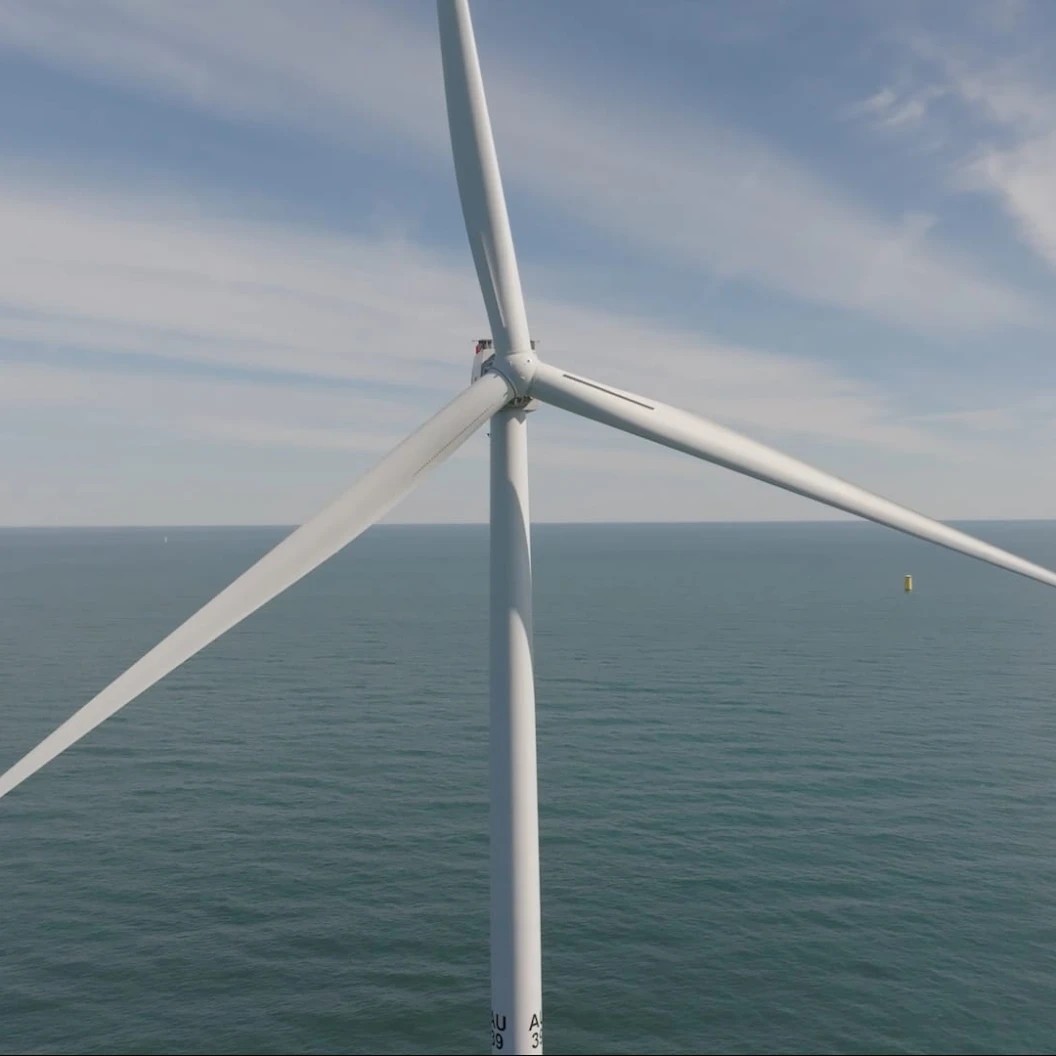
Vineyard Wind committed, following feedback and recommendations from NWF and others as well as conditions of the government, to a suite of measures to address potential impacts. These included restricting vessel speeds to 10 knots to reduce the danger of vessel strikes, a primary threat to right whales.
The developer used bubble curtains to limit underwater noise during the construction process. Turbine construction could not start in the winter and spring, when risk to the whales is highest, and construction had to stop if a whale was detected within 10,000 m (about 6 miles) of the site.
The agreement also included a $3 million commitment to develop and deploy technologies to protect right whales as the offshore wind industry continues to expand off the East Coast.
For more information on whales and offshore wind, check out our factsheet here!
Vineyard Wind also made history with the first offshore wind Community Benefits Agreement (CBA) in the nation between the developer and the local nonprofit Vineyard Power. As part of the agreement, Vineyard Power can allocate funding to solar or battery storage projects on Martha’s Vineyard.
So far, the program has supported new solar projects for the local library, senior center, and for the Wampanoag Tribe of Gay Head, in addition to committing $200,000 annually to subsidize electricity costs for low-income residents.
Vineyard Wind sought buy-in from other nearby communities as well. On the neighboring island of Nantucket, the company set up a $4 million fund to support projects related to climate adaptation, renewable energy, coastal resiliency, and historic preservation.
In Barnstable, MA, where the project’s subsea cables connect to the mainland grid, the town and Vineyard Wind committed to a Host Community Agreement that included payment to offset potential impacts from construction and funding for clean wastewater initiatives.
With construction on the project now complete, Vineyard Wind 1 is helping to lower polluting emissions in Massachusetts. It is estimated that the project will eliminate 1.68 million metric tons of CO2 emissions, equivalent to removing 325,000 vehicles from the roads.
Revolution Wind
Revolution Wind was also developed using robust protection measures, including adhering to vessel speed restrictions, restricting pile-driving when marine mammals are most likely to be present, and establishing exclusion zones for marine mammals, among other provisions.
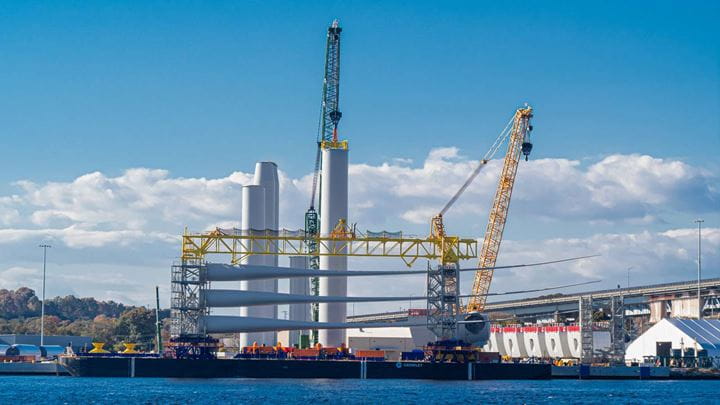
Of particular concern for this project was protection of Atlantic cod. The Revolution Wind lease area partially overlaps with the Coxes Ledge, a well-known spot for cod fishing. To address concerns about potential impacts on cod habitat and fishing, Revolution Wind was required to develop a plan to monitor for spawning Atlantic cod between November and March, including restricting construction during this season.
As part of the development of Revolution Wind, developer Orsted invested over $100 million into upgrading Rhode Island’s ProvPort into an offshore wind construction hub. Forty local, union jobs were created to upgrade the port. Offshore wind operations now supply 40% of ProvPort’s revenue. Orsted also invested $35 million into constructing a Regional Offshore Wind Logistics and Operations Hub in Quonset, RI, adding additional capacity to support the offshore wind industry.
In Connecticut, Orsted committed $100 million to revitalize State Pier in New London, CT, supporting Connecticut’s strategic plan for developing offshore wind energy infrastructure. The New London port project has contributed millions to the local economy. Orsted is also supporting research at the Mystic Aquarium tracking which species are present near offshore wind projects and identifying potential impacts of offshore wind on marine ecosystems.
Coastal Virginia Offshore Wind
The CVOW project, developed by Dominion Energy, is expanding on a pilot offshore wind project completed off the coast of Virginia in 2020. That project, which consisted of two turbines generating a total of 12MW of energy, has been helping to avoid up to 25,000 tons of carbon dioxide emissions annually and providing enough energy to power around 3000 homes. Now, when CVOW comes online later this year, it will become the largest offshore wind project in the country, powering around 600,000 homes.
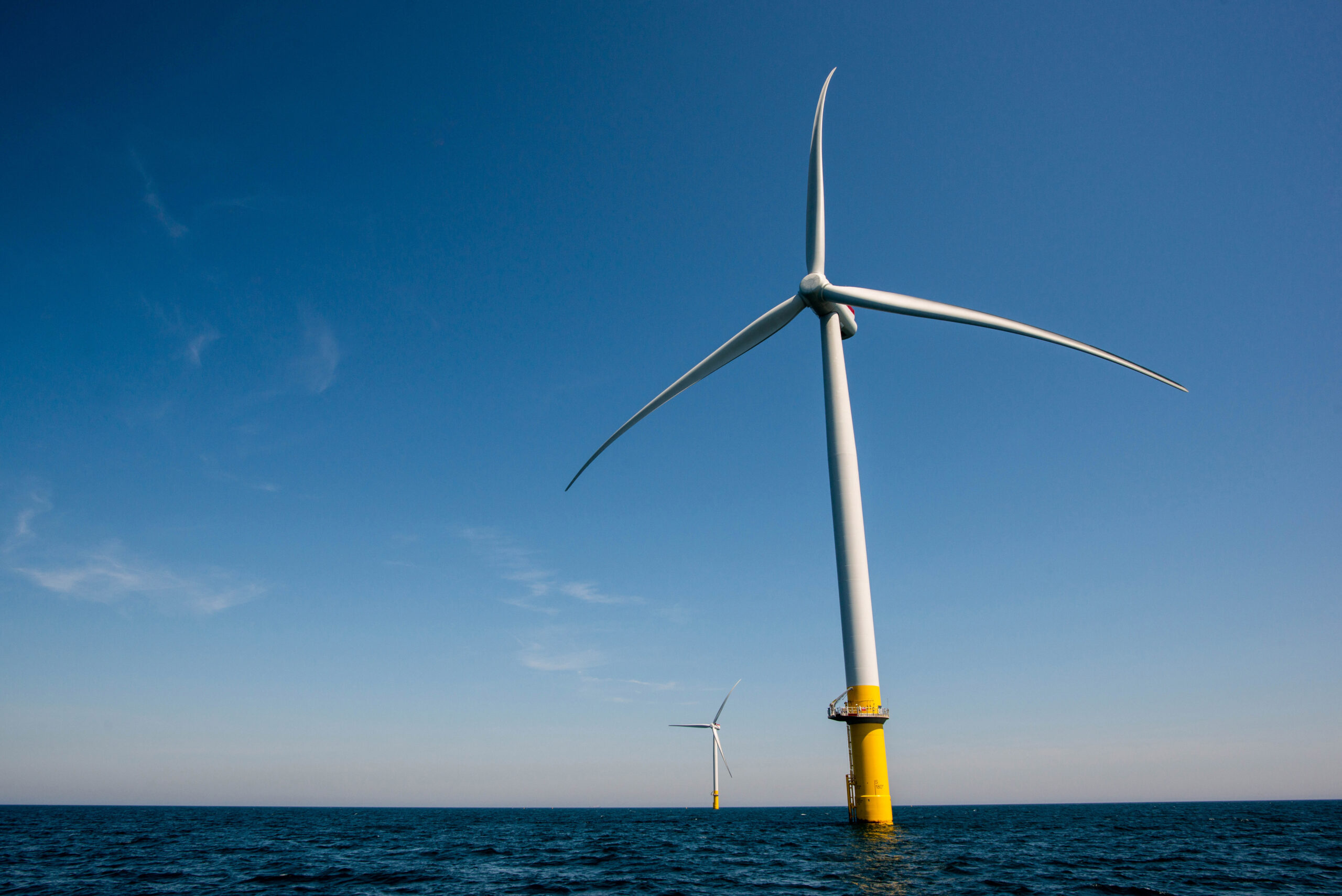
The CVOW project incorporated a range of mitigation strategies and developed plans specific to the species and habitats in its lease area. For example, Dominion avoided placing turbines in a part of the site that overlapped with a fish haven created by sunken World War II ships to protect important habitat.
Dominion also committed to funding The Nature Conservancy and the Center for Conservation Biology to conduct a study on the whimbrel, a shorebird that uses the Virginia coastline as an important stopover during its fall and spring migration periods. The study is aimed at gathering more specific data on the whimbrel’s flightpath to inform the responsible development of offshore wind.
For more information on birds and offshore wind, check out our fact sheet here!
An economic analysis of the benefits of the CVOW project for Virginians included $210 million in annual economic output, $5 million in additional Virginia state tax revenue, and the creation of 900 jobs during construction and 1,100 permanent jobs during operations.
The CVOW project has also helped to support the offshore wind supply chain elsewhere in the country. The project is being serviced by the ship Charybdis, the first offshore wind installation vessel that is U.S.-built, U.S.-crewed, and U.S.-flagged. The vessel was built in Texas, and the project employed over 1,200 workers at peak construction and used 14,000 tons of domestic steel.
Importance of responsible development of offshore wind
Climate change is one of the greatest threats to wildlife today, and addressing it is vital for protecting ecosystems and biodiversity. Projects like Vineyard Wind, Revolution Wind, and CVOW will limit harmful greenhouse gas emissions by delivering clean, renewable energy to the grid.
Offshore wind energy offers a critical opportunity to reduce our dependence on fossil fuels and support species already under stress from a changing climate. Achieving these benefits requires thoughtful development that incorporates planning for wildlife and habitats.
NWF advocates for robust environmental protections—including careful siting, avoidance, and mitigation measures at every stage of the offshore wind process—to make sure that offshore wind is built in a way that protects and sustains wildlife.