 Offshore Wind Energy
[Published March 5, 2026]
We hope you had a meaningful and reflective Black History Month as we move into March.
While the past month hasn’t brought major headlines in offshore wind, steady progress across projects, policy, and industry efforts continues to push the sector forward. If you know someone who would benefit from these updates and insights, please invite them to Subscribe!
SPOTLIGHT: Coastal Virginia Offshore Wind is progressing towards its goal of providing 2.6 GW of power to Virginia in 2026
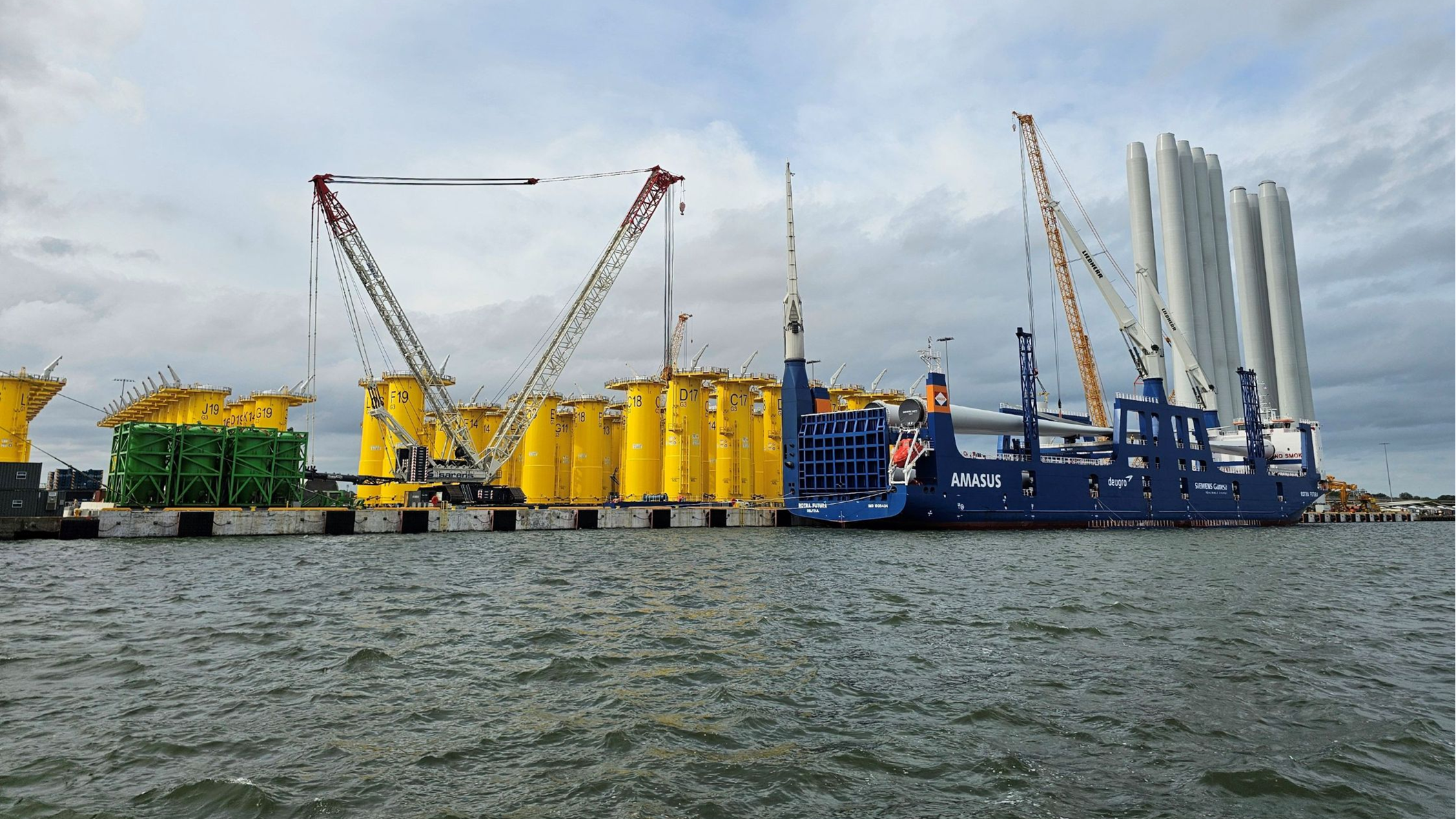
NWF staff highlighted the importance of offshore wind energy in the face of rising energy demand and costs in Virginia in an opinion piece for the Virginia-Pilot and the Virginia Daily Press.
FEDERAL UPDATES:
A phrase we do not get to share often in our federal updates: good news for offshore wind! Following a December 22, 2025, stop work order from the Trump Administration on all under-construction offshore wind projects citing unspecified national security concerns, the developers of all five projects currently filed lawsuits challenging the alleged concerns.
After demonstrating in courts their years-long engagement with the Pentagon throughout the development process, some dating back to the first Trump Administration, all five projects received relief from the court and have resumed construction.
Elsewhere in the courts, on February 17 the federal government (Defendants in the case) appealed the decision in the NY et. al. v. Trump (Wind Ban) case. The federal government also filed an opposition brief to the motion for a preliminary injunction in the Renew NE et. al. v. DOI et. al. (Umbrella Litigation). A preliminary injunction hearing is scheduled for March 4, 2026.
STATE AND REGIONAL UPDATES:
NORTHEAST (CT, MA, ME, NH, NJ, NY, RI)
The Northeast was hit by Winter Storm Fern in February which highlighted the importance, resilience, and strength of offshore wind during cold winter months when other energy sources are threatened. During the spike in oil-fired generation to meet the energy demand, wind energy contributed 1.5 GW of power, or approximately 10% of New England’s total load.
A report from the Union of Concerned Scientists also emphasized the potential contributions of offshore wind during the winter. Energy from Vineyard Wind (which is nearly complete) and Revolution Wind, would have reduced the risk of demand-driven power outages by 55%. The risk would reduce by 75% with the addition of generation from New England Wind 1 and SouthCoast Wind.
In Massachusetts, Vineyard Wind 1 is expected to be complete within days, with 60 of 62 turbines installed and 52 turbines cleared to start generating power. After performing well during the recent cold snap (operating between 40-75% capacity), the project will supply enough energy to power 400,000 homes at full capacity.
Massachusetts also signed an offshore wind export agreement with Nova Scotia which “establishes a commitment from both administrations to exchange expertise and insights related to the regulatory processes surrounding offshore wind, as well as to explore options for interconnecting power grids for effective transmission.”
New York and Rhode Island have also begun the process of merging construction, logistics, operations, and cargo management for Rhode Island’s Waterson Terminal Services to support local offshore wind initiatives. Despite that positive news, the New York State Energy Research and Development Authority (NYSERDA) also ended its fifth offshore wind solicitation this past month citing “federal actions disrupting the market.” Simultaneously, on February 10, NYSERDA issued a Request for Information on predevelopment initiatives to further project readiness, with responses due March 10, 2026.
MID-ATLANTIC (DE, MD, NC, VA)
The Coastal Virginia Offshore Wind project (CVOW) was allowed to resume after a judge granted their preliminary injunction. CVOW is expected to be complete later this year and provide power for up to 660,000 homes, or approximately 25% of Dominion Energy’s residential customers.
Struggles continue for US Wind off the coast of Delaware and Maryland. In 2025, US Wind filed cross-claims against the Trump Administration, arguing the Administration’s actions to revoke permits for the project are part of a larger plan to attack offshore wind energy for political purposes. In February, Maryland US District Judge Stephanie A. Gallagher (a Trump appointee) dismissed the cross-claims stating they did not provide enough evidence of the federal government’s actions to draw that conclusion.
GULF OF MEXICO (LA, TX)
During a light news month for offshore wind in the Gulf, Louisiana Congressman Troy A. Carter Sr., a member of the House Energy Commerce Committee, shared an article about the opportunity of offshore wind energy to support careers of oil and gas workers while reducing carbon emissions and protecting communities.
PACIFIC (CA, HI, OR, WA)
The long awaited Oregon Offshore Wind Energy Roadmap public comment period is officially underway! From February 17 through April 3, the Oregon Department of Land Conservation and Development (DLCD) will receive feedback on a public review draft of the Oregon Offshore Wind Energy Roadmap. The draft was developed with input from a roundtable group and in consultation with representatives of federally recognized tribes in Oregon, public meetings, and meetings with existing ocean users and wind energy businesses.
Roadmap appendices can be found HERE. A reviewers’ guide can be found HERE.
In California, the Ocean Protection Council’s Science Collaborative public comment period is open with comments due by April 1. A public listening session was held on March 4. This science collaborative will provide an important venue for collecting much-needed baseline data coordinated throughout the region.
RESOURCES:
Anatomy of a Bill Increase The American Council on Renewable Energy released “Anatomy of a Bill Increase” one pagers for Maryland, New York, Massachusetts, Delaware, and New Jersey. These resources break down increases to ratepayers’ energy costs and begin offering solutions.

Recent
Whale Tales and Real Facts 2026
January 26 | Recording
This unique virtual forum features whale experts that have decades of experience in tracking individual whales, conducting necropsies on deceased whales, and monitoring emerging threats to whales and other marine mammals.
NYSERDA’s Learning from the Experts Series: Oceanographic Research and Offshore Wind
January 28 | Recording
In this webinar, Travis Miles with Rutgers University provides an overview of regional oceanography and ecosystem dynamics and discusses emerging research about how infrastructure, including offshore wind projects, could influence oceanographic processes.
Upcoming
Webinar: ‘What’s Up with Mid-Atlantic Offshore Wind: Ongoing Challenges and the Road Ahead’
March 18 at 12pm EST | Register
The Monmouth University Urban Coast Institute (UCI) will host a webinar that provides a timely overview of the current state of offshore wind, focusing on the Mid-Atlantic region.Panelists will highlight the evergreen issues and challenges to the sector, but also discuss recent federal and state actions, major project milestones, supply chain considerations, and emerging challenges and opportunities.
GulfCon 2026
May 4-7 in Mobile, AL | Register
Held at the Mobile Convention Center, this event will bring together coastal scientists and stakeholders in state and federal government, academia, non-profit, and private sectors to discuss current Gulf research and to help plan for the future of the Gulf. Emphasizing the intersection of science and management, GulfCon will include sessions on themes that are important to ecosystem and community resilience as well as restoration and natural resource management.
2026 Pacific Offshore Wind Summit
May 18-20 in Long Beach, CA | Register
The Pacific Offshore Wind Summit brings together state and federal officials, industry leaders, and other stakeholders to mobilize support and build momentum for California to meet its ambitious planning goals to generate up to 5 gigawatts (GW) from offshore wind by 2030 and a nation-leading 25 GW by 2045.